
The Perfect Rug Size Guide

The Perfect Rug Size Guide
A beautiful rug can completely transform a room. It adds texture, color, and pattern, and anchors your furniture. The problem? Even the most beautiful rug can feel out of place if it’s not the right size. While there are a few general rules we follow when selecting rugs, there’s no one-size-fits-all approach. The size of the room, furniture layout, and how you use the space all play a role. We’re breaking down our go-to guidelines for choosing the right rug size in every room of your home.
Living Room: Anchor Your Furniture
In a living room, your rug should help define the seating area and make the furniture feel connected rather than scattered throughout the space. There are two approaches we typically recommend, depending on the size and layout of the room.
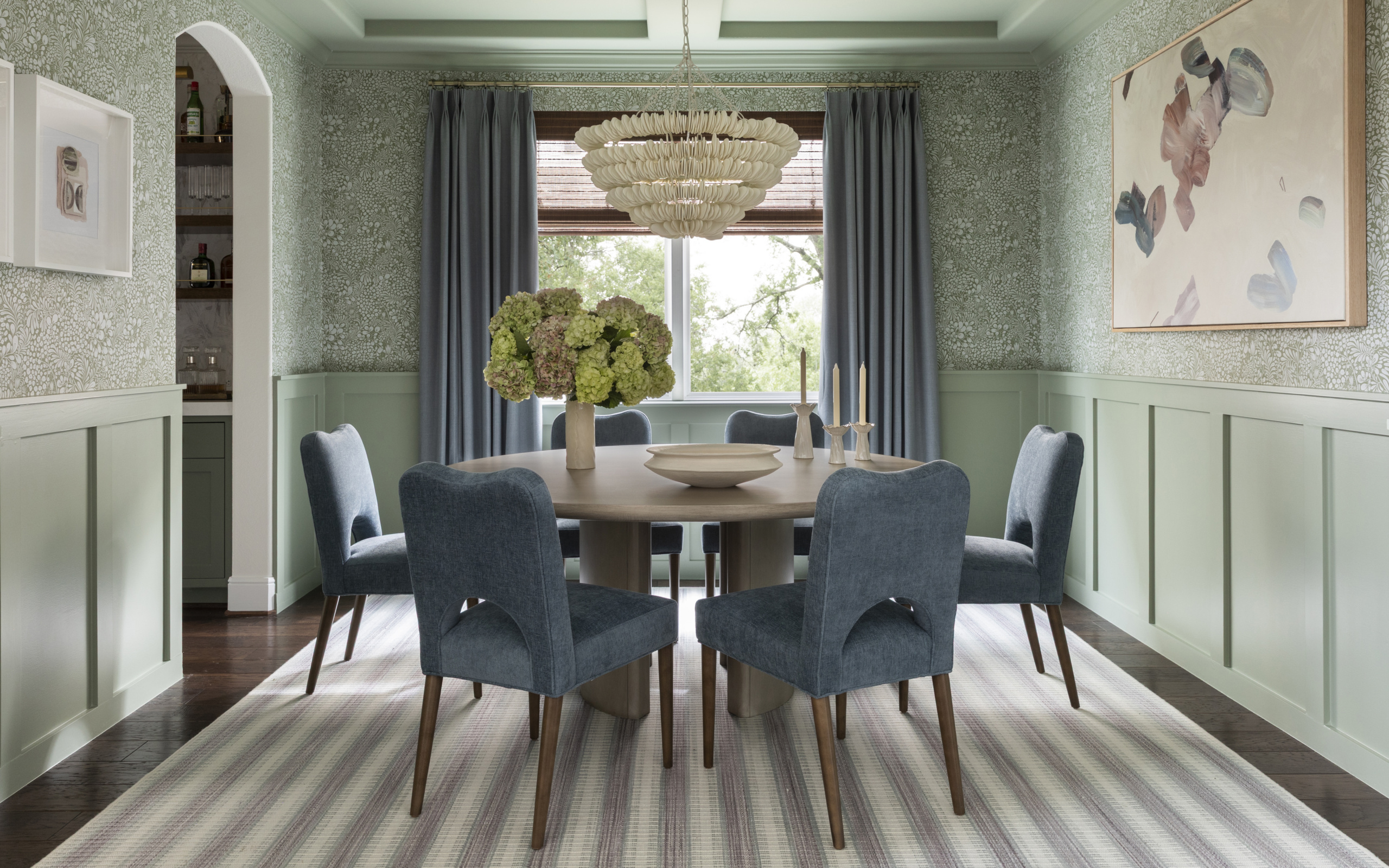
All Legs On: In larger living rooms, we love using a rug that’s big enough for all the furniture legs to sit comfortably on it. This creates a more expansive, cohesive look and helps establish the seating area within the room.
Front Legs On: If you’re working with a smaller living room, placing just the front legs of your sofa and chairs on the rug is a great alternative. You’ll still get that anchored, connected feeling without needing a rug that accommodates every piece of furniture entirely.
An 8′ x 10′ rug may work well in many living rooms, while larger spaces often call for a 9′ x 12′ or even a 10′ x 14′. But don’t get too caught up in standard sizes! Always consider the dimensions of your room and the scale of your furniture before making a decision.
Dining Room: Give Your Chairs Room to Move
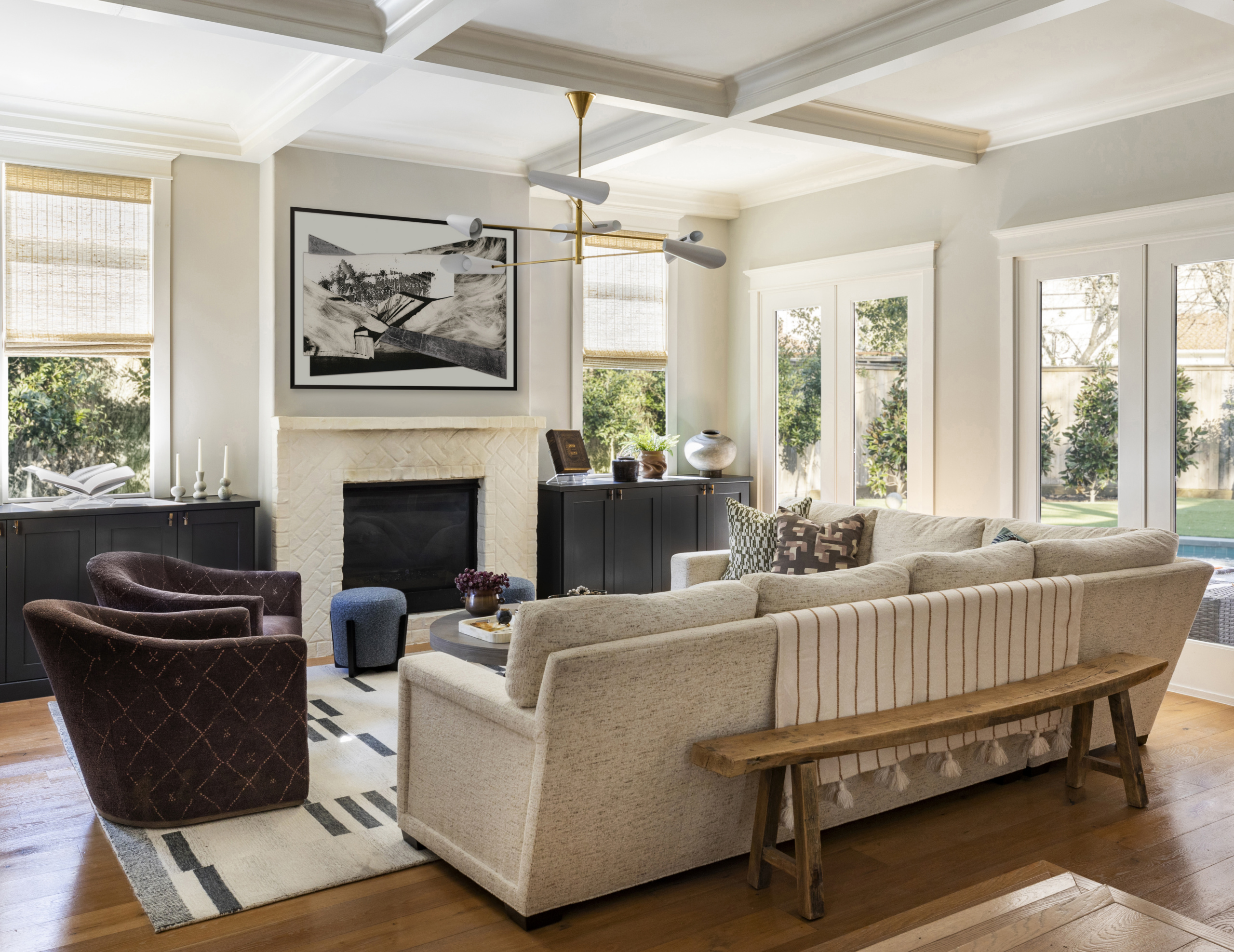
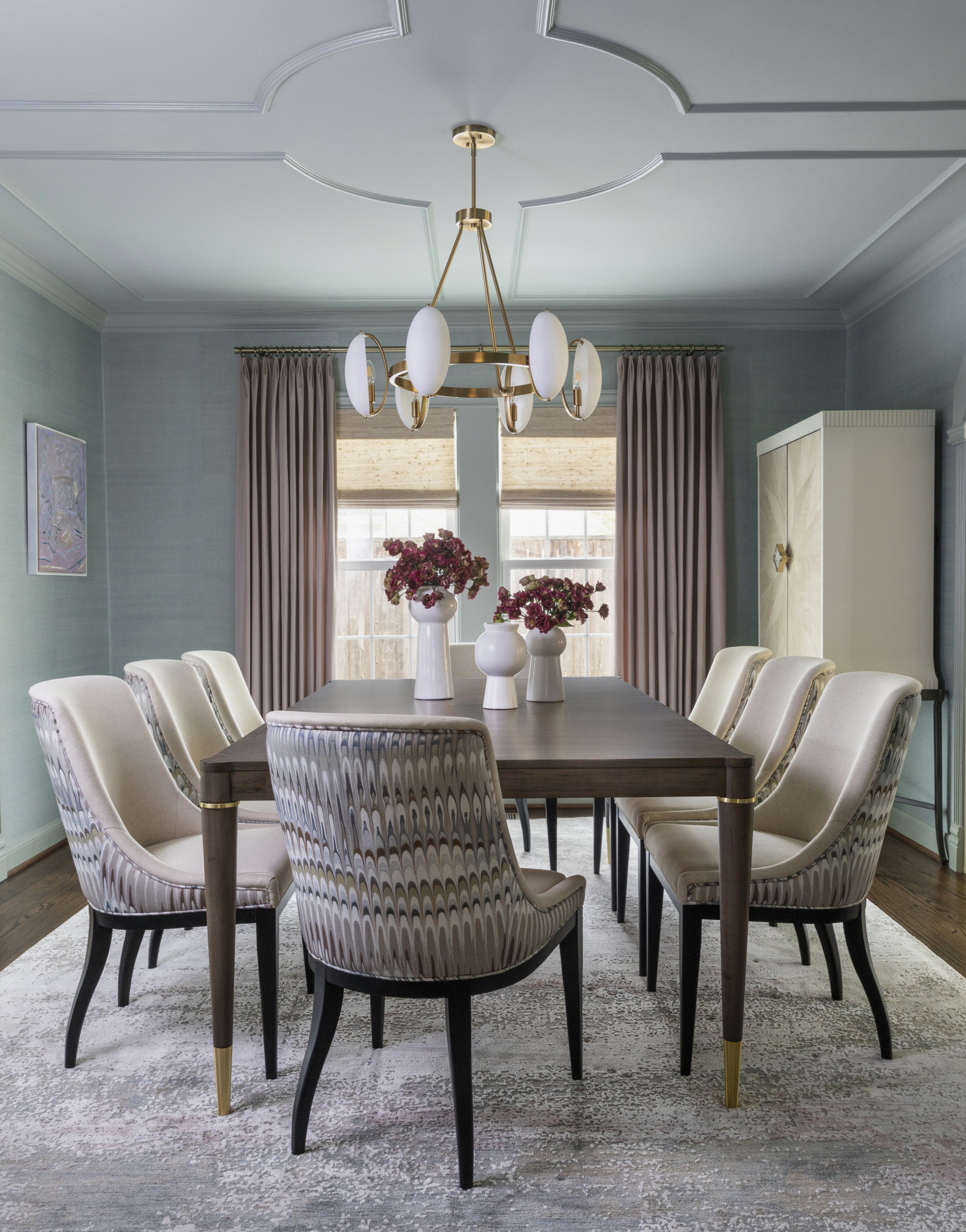
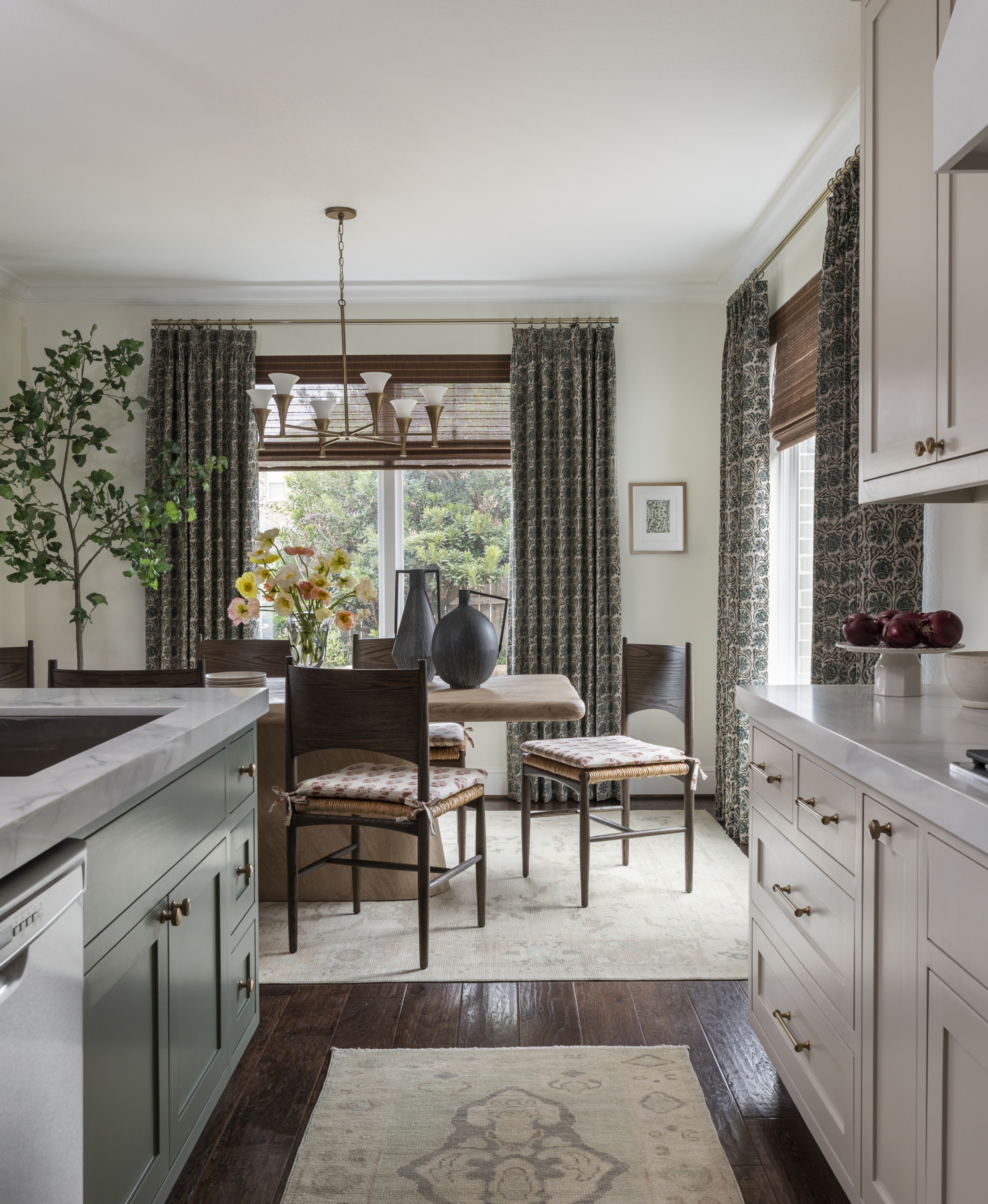
The biggest consideration when selecting a dining room rug is making sure your chairs can move comfortably. You want the rug to extend far enough beyond the dining table that when someone pulls out their chair to sit down or stand up, all four chair legs remain on the rug. This makes for a more comfortable and seamless dining experience.
We prefer dining room rugs that fill a good portion of the room rather than sitting like a small island beneath the table. A generously sized rug helps anchor the dining set and gives the space a more polished, cohesive look. In an open-concept layout, use the size of your table and chairs to determine the appropriate rug dimensions. If your dining space is its own designated room, we recommend choosing a rug that extends to within about 12 inches of the walls to help ground the entire space.
Bedroom: Create a Soft Landing
There’s something so nice about stepping out of bed onto a soft rug in the morning. Beyond comfort, a properly sized rug helps ground the bed and makes the entire bedroom feel warmer and more inviting.
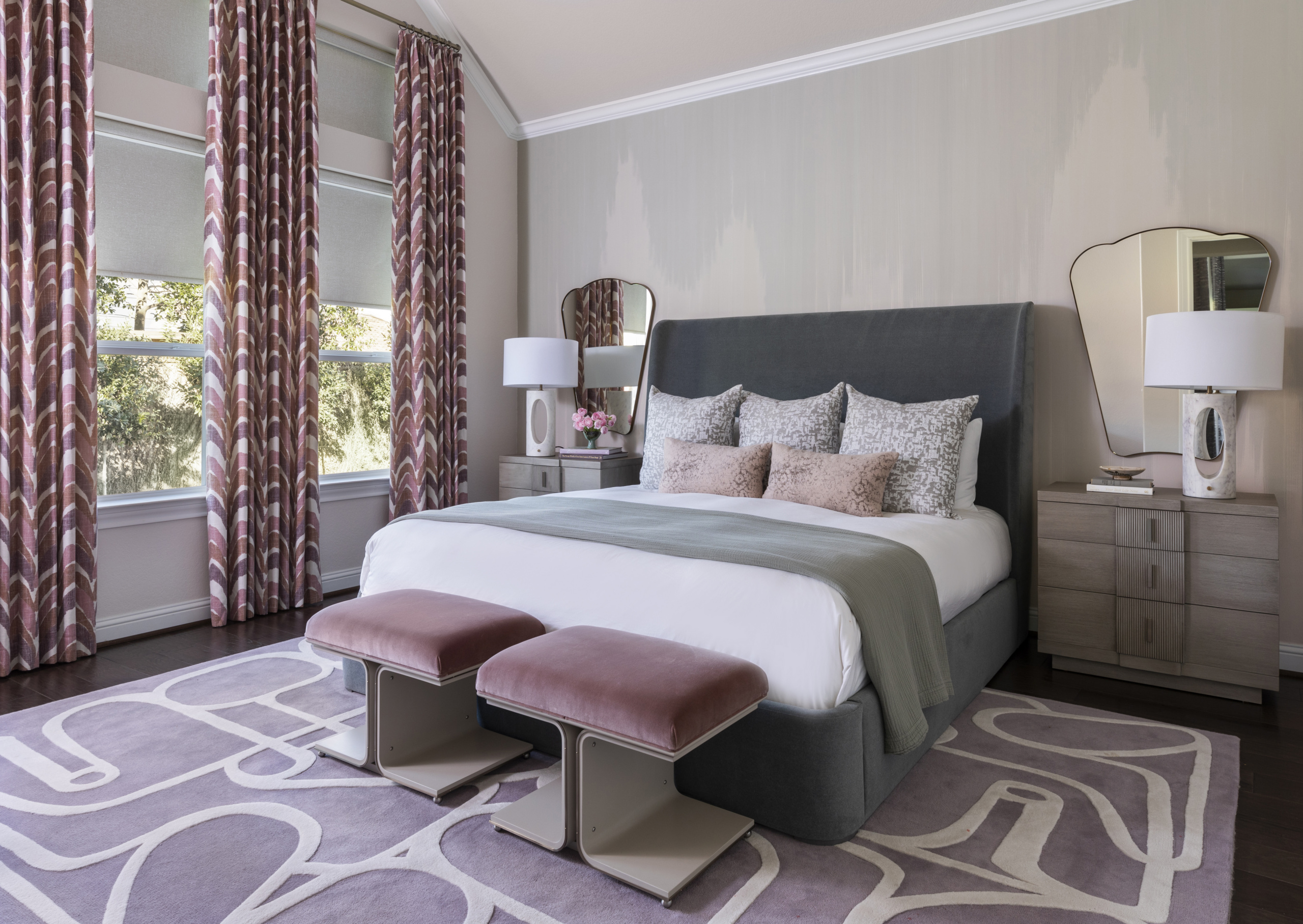
Ideally, the rug should extend about 18 to 24 inches beyond each side of the bed and the foot, giving you plenty of soft surface underfoot. For a queen bed, an 8′ x 10′ rug is often a good starting point. For a king bed, we typically look at a 9′ x 12′. Of course, these are just guidelines, and the size of your bedroom should always factor into your decision. We generally like to position the rug so it begins just in front of the nightstands or extends beneath them.
If a large area rug isn’t practical for your space, don’t rule out rugs altogether! A smaller rug at the foot of the bed can be a beautiful alternative.
Kitchen: Add Warmth Without Sacrificing Function
Kitchens are full of hard surfaces, so a rug can be a great way to soften the space and introduce some warmth. We especially love runners in kitchens placed along a stretch of cabinetry or beside an island because they fit perfectly in those areas. When choosing a runner, bigger is better, but ensure that it’s a few inches shorter than the length of the cabinetry or island it’s positioned alongside to keep it from feeling squeezed into the space.
Because kitchens are high-traffic areas where spills are inevitable, we recommend choosing something practical. Flatweave and washable rugs are great options that are easier to maintain while still bringing color, texture, and pattern into the room.
Entryways & Hallways: Don’t Forget the Smaller Spaces
Entryway and hallway rugs are often overlooked, but they’re some of the easiest ways to introduce a little color and pattern to these spaces.
For hallway runners, we generally recommend leaving about four to six inches of exposed flooring on either side and six to twelve inches at each end. This gives the runner enough breathing room without making it look undersized. In an entryway, one of the most important things to consider is the front door. Make sure your rug doesn’t interfere with the door’s swing, especially if you’re working with a thicker pile.
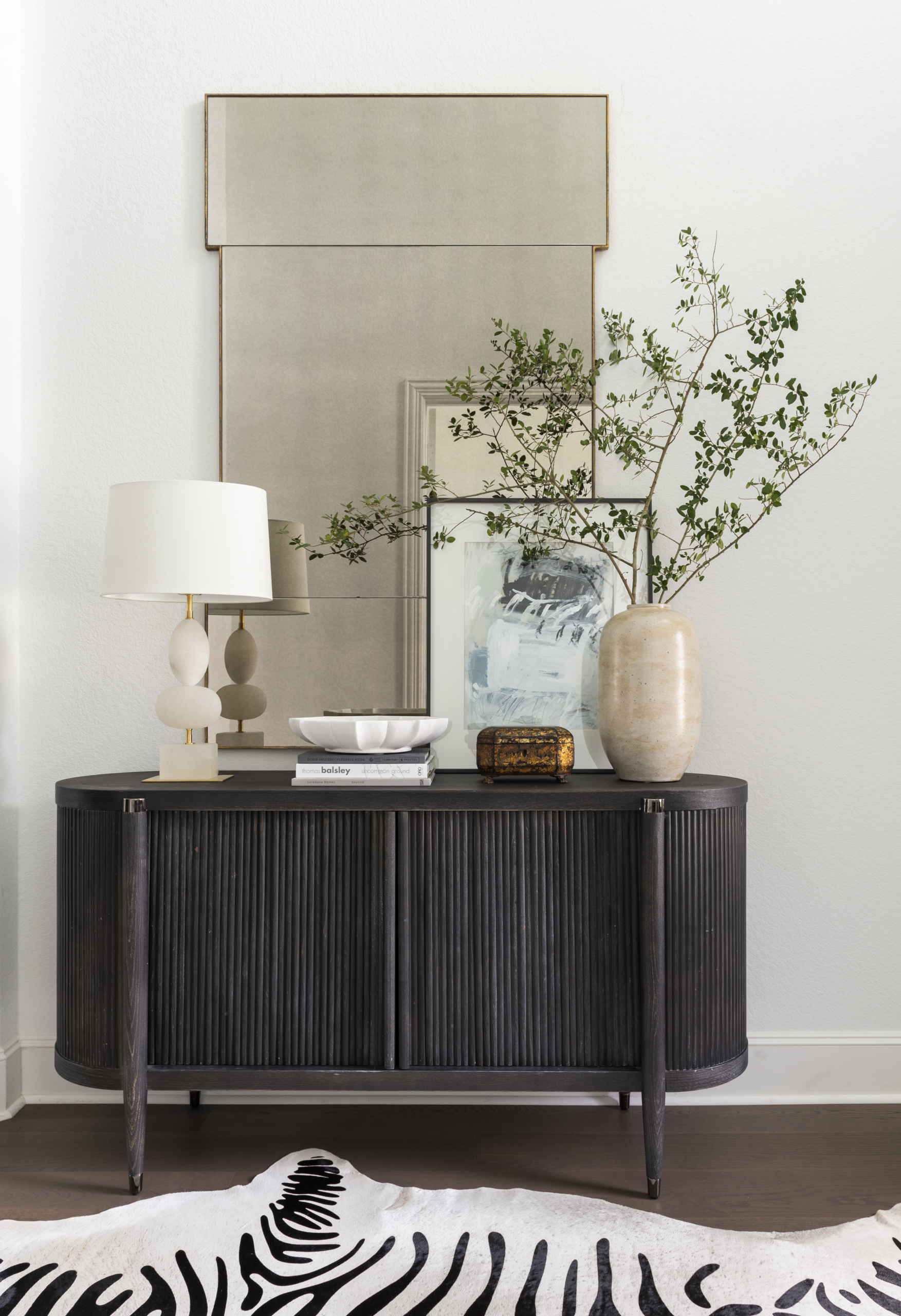
We love incorporating vintage-inspired Oushak rugs in these spaces for their beautiful colors and patterns. Cowhide rugs can also be a fun option, particularly in entryways where you want to introduce an unexpected shape, texture, or a little more character.
A Few More Rug Tips We Always Keep in Mind
When in doubt, go bigger
A rug that’s too small can make a room feel disconnected, while a larger rug helps bring everything together. If you’re deciding between two sizes and your room can accommodate the larger option, that’s often what we’d recommend.
Measure before you buy
One of the easiest ways to visualize a rug in your space is to use painter’s tape to outline its dimensions on the floor. This gives you a much better sense of how the rug will fill your space and relate to your furniture.
Don’t skip the rug pad
We always recommend using a rug pad to help keep your rug in place, add cushioning, and protect your floors. Have it cut approximately one inch smaller than the rug on all sides so it stays hidden beneath the edges.
Consider layering rugs
If you love the look of a large rug but don’t love the price tag, layering can be a great solution. Try placing a smaller patterned rug over a larger natural fiber rug. You’ll get the scale you need to anchor the room while still incorporating a beautiful statement piece.
Don’t be afraid to go custom
Not every room works with a standard rug size, especially when you’re dealing with an unusual floor plan. In those cases, we often turn to custom-cut broadloom carpet, which can be made into an area rug that fits the space’s exact dimensions perfectly.
Planning a new build? Think about rug sizes early
This is something we encourage clients to consider early in the design process. If you’re building a custom home, pay attention to your room dimensions and furniture layouts to make sure they can comfortably accommodate standard rug sizes. Designing with standard dimensions in mind can give you more options when it comes time to shop and is often much more cost-effective than needing something custom-made.
The Right Rug Makes All the Difference
At the end of the day, choosing the right rug is about more than finding a color or pattern you love. Scale and proportion are just as important, and getting those details right can completely change how a room looks and feels.
These guidelines are a great place to start, but every room is different. Take the time to measure your space, consider your furniture arrangement, and think about how you want the room to function. The right rug will be more than a beautiful piece that sits beneath your furniture. It should help bring the entire room together.